Known affectionately as “jogya”, Yogyakarta has long been on our bucket list. A monarchy within the Republic of Indonesia, the city stands out from the rest. About mid-way between Jakarta and Bali, the city is surrounded by centuries-old temples and has much more to do than you can squeeze into just a weekend. But, if all you have is two days, here’s how to make it work.
TL;DR: Spending the weekend in Yogyakarta, Indonesia
- Where is it? Central on the island of Java (but not part of Central Java Province), about an 1.5 hour flight from either Bali or Jakarta
- Budgeting: $30-$40 for a private car and driver, $45 for Borobudur, $40 for Prambanan, $17 for a massage, $4 for Museum Sonobudoyo and $4.50 for Taman Sari
- What to do and see: Ancient temple ruins, museums, relaxing massages and local foods
- When to go: April through October (for the least rainfall and humidity with pleasant temperatures)
What to do: Day 1 of your Yogyakarta weekend
We started the day early with breakfast at our accommodation before getting picked up at 7:30am. After all, we only had the weekend to explore Jogya,
If you’re planning on exploring the area’s temples, the easiest way to do this is either joining a group tour or hiring a car. The temples here are not close together, and the furthest, Borobodur, is about 40 kilometres outside of town. We opted to hire a car as, at about $30-$40, it was cost-effective and allowed us to go at our own pace.
Visit the temples
One of the biggest draw cards to Yogyakarta is the easy access to UNESCO-listed heritage sites such as Borobodur and Prambanan. The former may be the one most tourists come to see, but we found the latter to be our favourite by the end of the day.

Borobodur
Somehow both bigger and smaller, busier and quieter than expected, Bodobodur attracts more than a million people per year. Yet, the way visitors are shuffled through is surprisingly well organised.
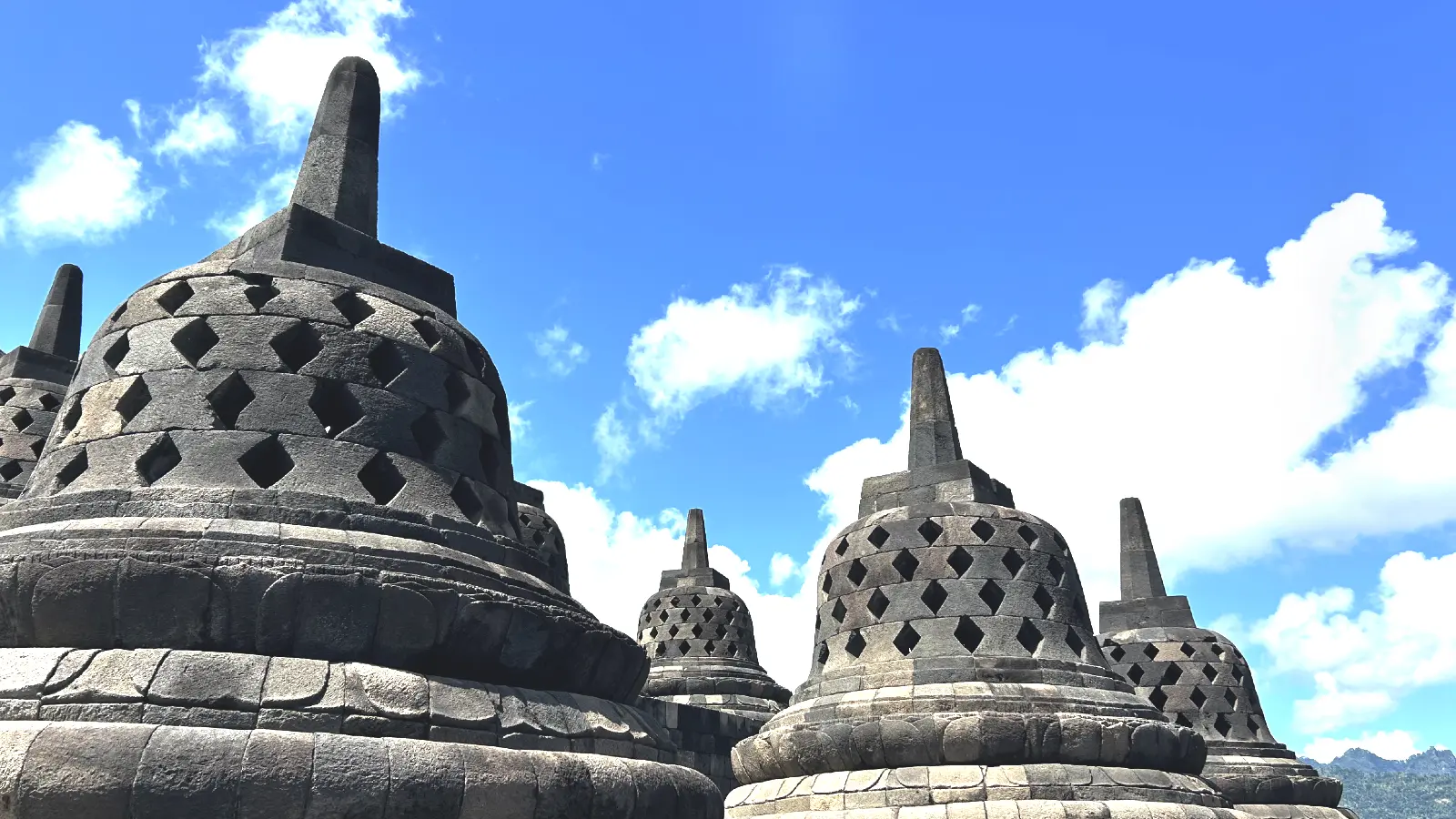
Firstly, there’s two types of tickets available, one to the temple grounds, and one that allows you to climb it. Given the chance, we opted to climb so we could see the iconic stupas up top. Upon arrival, you’re given “temple shoes” to wear, which are basic sandals said to not cause damage to the temple, before waiting for a guide.
If you’re climbing, you must go with a guide. Luckily, the groups are kept pretty small with only about 10 people so being in a group wasn’t at all a problem.
The 9th century Mahayana Buddhist temple is on some pretty expansive grounds and you’ll start the tour a few hundred metres from the temple itself. The tour stops every few minutes to tell you some different facts about the site and plenty of time to take pictures from all angles.
Once we approached the temple structure, it took us by surprise just how intricate the entire thing is. Crafted from volcanic stone, the walls leading up to the iconic stupas on the top level are carved with centuries-old stories. Unless there’s any physical reason why you can’t climb the structure, we highly recommend you do. For just a few dollars more for the ticket, you can get a much better perspective of the temple and truly grasp how much craftsmanship went into its construction.
Recommended? Yes!
Before heading to Borobodur…
- Cost: IDR 412,500 for a ground-only pass or IDR 455.000 to climb the temple
- Hours: 8:30am-3:30pm
- Tip: Pre-purchase tickets online as they can sell out, and opt for an early tour before it gets too hot as there’s little shade.

Prambanan
With little expectations here compared to the much-talked-about Borobodur, we didn’t quite know what Prambanan was going to be like. But after a few friends told us how much they loved it, we added it to our itinerary. And we’re glad we did.
Perceived as a little sister to Borobodur, Prambanan is actually a temple complex of four temples spread across almost 100 acres of land. Visitors are free to roam around, and inside, of the temples too.
We started with the closest one to the entrance, which is. Prambanan temple itself. (The one that appears in most of those Google image searches you’ve probably come across.) Upon walking in, we were approached by a history student at a nearby university who was interning at the site and offering free guided tours. A win-win for both of us, she told stories of the temple and offered to take as many photos as we liked.
The 9th century Hindu temple is made up of a few different structured dedicated to Shiva, Vishnu and Brahma, and while some of it is eroded now, the student was able to help us see what was carved into the stones hundreds of years ago.
Continuing through the complex, and getting quieter the further in you get, Lumbung is the next temple along, followed by Bubrah and then Sewu. The latter being more impressive of the three.
Tucked at the furthest point of the complex, Sewu was incredibly quiet. A curious mix of ruins and structures, it looked a bit like a long-abandonded construction site, but in a fascinating way. You can weave in and out of pieces of former temple as you approach a very-much in-tract section in the middle that makes it feel like you’re the first person discovering it.
Recommended? Yes!
Before heading to Prambanan…
- Cost: IDR 400,000
- Hours: 6:30am-5pm
- Tip: Wear comfortable shoes or consider hiring a push bike as the sites are a bit spread out.

Plaosan
Seeing there was another temple just a few minutes’ drive away, and that it wasn’t quite closing time yet, we squeezed in a last-minute visit to Plaosan since we weren’t sure if we’d ever get to experience another weekend in Yogyakarta. And it seemed that this isn’t something many people do.
Upon arrival, we were the only ones there and only a handful more arrived during the visit.
A much smaller temple complex than the others, it’s made up of two structures: Plaosan Lor and Plaosan Kidul. Like Borobodur and Prambanan, it was also built in the 9th century.
Luckily, it didn’t take much time or effort to walk around Plaosan. After a long day of visiting temples in the heat of the tropical sun, it was just about time to have a quick dip in the hotel’s pool and relax.
Recommended? If you have time and are nearby.
Unwind with a soothing massage
Used to massages in Bali and Thailand, we thought we’d give a Javanese one a try. Plus, after a long day walking around, it’s a great way to relax.
About a 10-minute walk from our accommodation was the well-reviewed De Wave Family Massage. It was IDR190,000 for a 90-minute aromatherapy massage, complete with the very Southeast Asian and soothing scent of lemongrass.
Although the price was similar to what we’d often see in Bali, we did love that you were given an individual room for your treatment. Sometimes shared spaces can be awkward, especially if you need to get changed or undressed beneath a sheet.
Unbeknownst at the time, De Wave is actually a chain of massage places across Indonesia. And, if they’re similar to this experience, we’d definitely recommend giving its services a go.
Recommended? Yes!
Before heading to for a massage…
- Cost: IDR 190,000 for 90-minute aromatherapy massage
- Hours: 10am-10pm
- Tip: If you’re visiting during Ramadan like we did, avoid going for a treatment around sun-down as that’s when the fast is broken and the staff take a break.
What to do: Day 2 of your Yogyakarta weekend
Knowing we had to grab an afternoon flight back to Jakarta to catch a connection back to Sydney, we woke up bright and early to pack in as much as we could into our Sunday.

Visit a local market in Yogyajarta
Always providing a great peak into how locals live, a visit to a local market is always atop our list in a new city. There’s always fresh and exotic fruits and vegetables for sale, sweet and savoury aromas of whatever’s cooking and often some unique souvenirs to pick up.
Pasar Ngasem was the closest to our accommodation, and where we started our morning. Since we were doing a bit of a power-tour of Jogja this morning and had a hearty breakfast of homemade banana pancakes at the accommodation, we didn’t have anything to eat here.
Recommended? If you have time.

Check out a local museum or two
Not knowing too much about Yogyakarta aside from the home of beautiful temples before our visit, a museum stop was high on our list. And, while on the way back to our accommodation after visiting the temples, the driver recommended a visit to Museum Sonobudoyo. And we’re glad he did.
Spread across two buildings, there’s plenty of creatively curated exhibits to help visitors learn about Javanese culture and Yogyakarta’s history.
Recommended? Yes!
Before heading to Museum Sonobudoyo…
- Cost: IDR 20,000 for foreigners
- Hours: 8am-9pm
- Tip: Going to the second building looks like an exit, but it isn’t! And it’s definitely recommended as the newer section is curated very well.

Taman Sari
The last remaining monarchy in Indonesia, Yogyakarta has a few sites that still let you get a glimpse of what life must have been like for royalty. And Taman Sari is certainly one of them.
A curious area with homes tucked in between the complex’s buildings, the area is much bigger then we originally thought. Aside from the outdoor pools with clear-blue water often seen in images, there are also tunnels, bathhouses and other out-buildings to be explores. As tempting as it is in the Jogja heat though, there’s no swimming allowed here.
Recommended? Yes!
Before heading to Taman Sari…
- Cost: IDR 25,000 for foreigners
- Hours: 9am-3pm
- Tip: There are plenty of people on the grounds wearing official shirts who will insist on taking you for “free” tours, usually ending at a souvenir or art store. Make it clear if you’re not going to give any payment and don’t feel pressured to take them up on the tour or buy anything from them.
Where to eat in Yogyakarta
Our flight arrived into town late on the Friday, and we were served a snack on the flight, so we didn’t have dinner that night. But the couple of meals that we did in enjoy in town were delicious.

Waroeng Spesial Sambal “SS” Plengkung Gading
Address: Jl. Mayjend Sutoyo No.62, Mantrijeron, Kec. Mantrijeron, Kota Yogyakarta, Daerah Istimewa Yogyakarta 55143, Indonesia
After our massage, and after a long day of exploring in the hot sun, a good meal was in order. And with great reviews and a packed-with-locals dining room, we’re glad we chose this place.
The food was delicious and incredibly affordable. The fried fish was perfectly cooked and the sides to go along with it were flavourful with a kick, but weren’t too spicy. The star of the show though? The sambal. This place had multiple pages of its menu dedicated to the Indonesian hot sauce.
Here, the hardest thing to choose won’t be your mains, but which sambal to eat with it.

Gudeg Wijilan Bu Hj. Rini
Address: Jl. Wijilan No.7, Panembahan, Kecamatan Kraton, Kota Yogyakarta, Daerah Istimewa Yogyakarta 55131, Indonesia
Before our return flight we had time for one last Indonesian meal. And we wanted it to be a local specialty. Gudeg, a Yogyakarta specialty, is made from jackfruit and then slow-cooked for hours and served with a variety of sides. Mine came with a boiled egg, tempeh, rice and a few other things that, to this day, we’re still not quite sure what they were. What we do know, is that they were delicious.
How to get to Yogyakarta
From Australia, you’ll need to fly to either Bali or Jakarta and catch a connecting flight to Yogyakarta. The journey can get a bit long with connections, but it’s certainly worth it. Especially if you’re adding this into a longer Indonesia trip.
Whether you’re coming from Bali or Jakarta, the flight is about 1.5 hours.
As We were in Jakarta for a business trip, and extended our Monday-to-Friday stay so we could tack on this two-day Yogyakarta itinerary which was really easy thanks to the quick flight.
Where to stay in Yogyakarta
Yogyakarta is a fortified city, with many of the city’s attractions being within them – including museums. Staying within easy reach of that is the best way to get around easily. It can get very hot, so ideally you’ll want to be within a 15-20 minute walk of where you’d like to go. Otherwise, Grab (Indonesia’s answer to Uber) is very affordable should you want to travel in air conditioned comfort.
We stayed just a few minutes’ walk south at the Pondok Ijo Guesthouse. With private rooms and ensuites, plus a refreshing pool, the stay was very affordable at just $20 per night including breakfast. It was clean and the staff were very friendly, and we’d definitely stay there again.
What to know before you go
Getting from Yogyakarta to the airport
There are (sort of) two airports in Yogyakarta – Yogyakarta International Airport (YIA) and Adisutjipto Airport (JOG). About an hour away from the city, YIA is where the vast majority of flights will land. There’s only one remaining route at JOG, from Jakarta Halim Airport. If you’re coming on a connection from Australia or from Bali, you’ll be landing at YIA.
While we opted for a Grab to take us to and from the airport, there is a budget-friendly airport train that can take you to the main station in Jogja.
Is it worth getting a driver while in Yogyakarta?
We think so! Not only goes a driver allow you the freedom to craft your own tour and schedule, it often turns out to be cheaper. This is especially the case if you’re travelling with more than one person.
To give you an idea of the cost-effectiveness, at Borobudur, someone in our tour group asked if we’d be interested in sharing a Grab back to town. The fare was about IDR250,00. That’s more than half of the driver’s full day cost.
Where to go next…
-

How to get to Western Sydney Airport
-

3-day Barrington Tops weekend itinerary
-

3 of the best Royal National Park walks for a perfect day in the iconic park